



































News

From now on, your customers have the opportunity to upgrade selected models of the Colormetrics P5100 and P5500 POS systems with a warranty upgrade to extend the...
From now on, your customers have the opportunity to upgrade selected models of the Colormetrics P5100 and P5500 POS systems with a warranty upgrade to extend the warranty period to 5 years!
The warranty upgrade must be booked directly when purchasing the POS systems. Booking it in a separate order is not possible.
The following SKUs include the warranty update:
Colormetrics P5100 : colorwar5100-2, colorwar5100i3-2, colorwar5100i5
Colormetrics P5500 : colorwar5500-2-1, colorwar5500i3-2, colorwar5500i5-2
Benefit from the extended warranty period and order the Colormetrics P5100 and P5500 POS systems with the warranty upgrade directly from your sales representative!

We have good news for you: TSC Auto ID has informed us that the list prices for selected printers have been reduced as of the 1st of October 2024....
We have good news for you: TSC Auto ID has informed us that the list prices for selected printers have been reduced as of the 1st of October 2024. These are models from the TSC desktop printer series TH220, DH220, TH240 and DH240.
Details of the exact new prices and the availability of the printers are available on request from your sales representative. Do you have questions? We are here for you and will gladly support you with our expertise and service – simply let us know how we can best support you!

Seagull Scientific notified us about a list price change for BarTender licences and maintenance agreements....
Seagull Scientific notified us about a list price change for BarTender licences and maintenance agreements. This price change is effective as of the 1st of October 2024.
Here is a breakdown of the relevant information for you:
The list price change applies to the concerned products as follows:
- Perpetual Licensing will be increased by 15%.
- Perpetual MNT Rate will be 23%.
- Software Subscription Pricing will be increased by 10%.
The list price change will be applied to your orders as follows:
- Existing maintenance agreements and licences remain unaffected by the price change.
- Orders you place by the 30th of September 2024 will be delivered at the current list price.
- All new orders which are based on a quote from September and that you place with us within 30 days of the quote date will be delivered at the quoted price.
- All new orders as of the 1st of October 2024 which are not based on a quote from September or that you place after 30 days from the quote date have elapsed will be subject to the new price list.
- Approved project prices remain valid for the agreed duration.
Details about the exact new prices are available on request from your sales representative. Do you have questions? We are here for you and will gladly support you with our expertise and service – simply let us know how we can best support you!

The fully rugged Panasonic ...
The fully rugged Panasonic TOUGHBOOK G2 Windows tablet is the ideal choice for meeting the technical and environmental challenges of materials handling, freight and logistics management. With a wide range of connectivity options including Wi-Fi 6, Bluetooth 5.1 and 4G/5G, it is suitable for a variety of tasks such as quality control, vehicle diagnostics or access to real-time data systems and cloud-based applications. It is also all-weather ready and features a sun-, rain- and glove-proof 10.1" touch display.
Find out more: Download the PDF here!
Order the fully rugged notebook Panasonic TOUGHBOOK G2 directly from your sales representative!

Zebra has launched the new ...
Zebra has launched the new FXP20 for high accuracy checkout accounting and inventory management at the POS. The stationary RFID reader can filter out stray tags and capture RFID labels without the risk of confusion with items in nearby aisles or displays. It also combines the antenna and reader in a compact and lightweight design, making it easily adaptable to a variety of applications and workflows, and scalable from a single retail counter to large, complex retail facilities.
Order the Zebra FXP10 from your sales representative now!
Our top categories
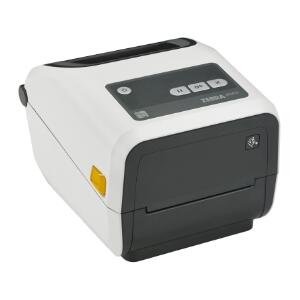
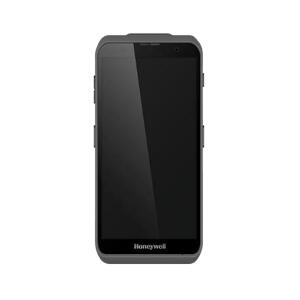
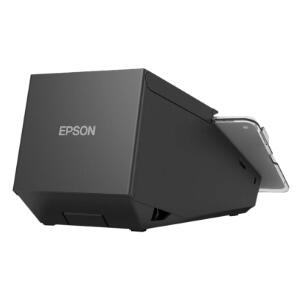
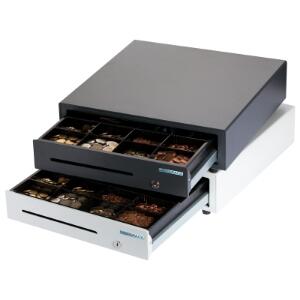












Selected products












The road to success: do we really have to get worse at everything?
Last week I had a conversation with a customer that left me speechless....
Last week I had a conversation with a customer that left me speechless. Our sales department asked me to speak to a customer on the phone who doesn’t buy from us because we supposedly supply end customers.
No problem, I thought. I called and explained that this is exactly what we don’t do, and that this is a key promise to our dealers. There are extremely rare exceptions, – only if a vendor forces us to, or a retailer explicitly asks us to. But that almost never happens.
Then it turned out that there was a misunderstanding: the customer said that we also supply small retailers. My answer: »Yes, we do and we have to, based on our contracts with the vendors. Our competitors do that too.«
»All correct«, I hear, but then it got exciting: »Your large competitors are not interested in small customers, so they are poorly served. At Jarltech, the small dealers feel comfortable because you provide a great service.«
I didn't know whether to laugh or cry ... A customer doesn’t buy from us because our service is too good? I hadn’t expected that.
But don't worry, contrary to the headline: We will continue to endeavour to offer every customer the best service we can!
Why is good service so important again?
I'm writing to you today from China. Here I have learnt once again why good service is so important....
I'm writing to you today from China. Here I have learnt once again why good service is so important. If you want a customer to pay more than elsewhere, then you have to make the difference! You have to know what they like and anticipate their wishes.
Here in Shenzhen is the Grand Hyatt Hotel – I was here at least six times a year before Corona – and even stored some luggage in Shenzhen, so that I only had to fly with hand luggage. Liquids and such ... that was difficult on the plane.
It’s been over three years since I was last here, and I arrived to be greeted by an armada of hotel staff. My beloved Coke Zero was waiting for me in the car outside the airport. My luggage, which I hadn’t expected to see again, had been stored for three years and completely cleaned for my new stay. Everything was hanging in the wardrobe and the bathroom was neat and tidy. My razor was charged and my chargers stood on the desk. Of course, the fridge was full of Coke Zero and the white wine I had last drunk three years ago. Even the room service knew what I liked to eat.
That’s what hospitality really is. And we have to do the same at Jarltech. Always write down what our customers want and like. And when I go out to dine with a customer, I need to know whether they are vegan or if they don’t like pork, for example. Some customers want to be called and courted on a weekly basis, whereas others find this rather annoying. Some still prefer paper catalogues, others believe it’s environmental pollution. And all the better if a customer returns after three years, and I still have it all written down somewhere. Jarltech may not be a hotel, but we are a service provider that has to differentiate itself The difference is always in the details.
The world's smallest chef gives a guest performance in Usingen
It's finally back on: Our 3D projection dinner show »Le Petit Chef« will be back in our restaurant »Uwe and Uli« (www.uwe-uli.de) from the 11th of October...
It's finally back on: Our 3D projection dinner show »Le Petit Chef« will be back in our restaurant »Uwe and Uli« (www.uwe-uli.de) from the 11th of October 2023 to the 30th of April 2024. Personally, I always have fun enjoying delicious food with a bit of a show. Come by sometime – it's also great for Christmas parties with up to 20 people. And if you're a customer of ours, why not have your sales contact invite you next time you visit Jarltech? 😊
Have fun with the little chef!